
If you’re searching for fresh culinary inspiration, bold flavor concepts, and creative ways to elevate your cooking, you’re in the right place. This article dives into the latest culinary buzz, explores global cuisine inspirations, and uncovers innovative Fojato fusion experiments that blend unexpected ingredients into unforgettable dishes. Whether you’re a curious home cook or a seasoned kitchen enthusiast, you’ll also discover practical Garto kitchen hacks designed to make your time in the kitchen smarter, faster, and more flavorful.
We’ve drawn from professional chef techniques, global food trend analysis, and hands-on recipe testing to ensure every insight is practical and reliable. From mastering essential knife skills to experimenting with cross-cultural flavor pairings, this guide is built to help you cook with more confidence and creativity. By the end, you’ll have actionable ideas you can immediately bring to your kitchen—and the inspiration to keep exploring beyond your comfort zone.
Unlock Your Culinary Potential: It Starts With the Blade
A sharp knife isn’t just a tool—it’s an extension of your hand. Knife work means controlling the blade with purpose, not force. Many cooks confuse speed with skill, but speed comes from accuracy. When you hear essential knife skills, think of three basics: grip, stance, and cut consistency.
| Term | Simple Meaning |
| Grip | How you hold the knife for control |
| Stance | How you position your body for balance |
| Dice | Cutting food into even cubes |
Master these, and prep becomes safer, faster, and surprisingly satisfying (yes, chopping onions can feel cinematic) and empowering.
Your Most Important Tool: Understanding the Chef’s Knife
First and foremost, the 8-inch chef’s knife is the workhorse of your kitchen. It handles over 90% of tasks—slicing onions, dicing carrots, mincing herbs, even breaking down chicken. Instead of switching tools constantly (and cluttering your board), you gain speed, consistency, and confidence with one reliable blade.
To really benefit, you need to know its anatomy. The heel powers through tough ingredients like squash. The tip handles delicate work, such as trimming strawberries. The bolster—that thicker junction between blade and handle—adds balance and protects your fingers. Meanwhile, the tang (the part of the blade running into the handle) stabilizes the knife, improving durability and control.
Most importantly, adopt the pinch grip. Pinch the blade just in front of the handle with your thumb and forefinger, rather than gripping the handle in a fist. This simple shift dramatically improves precision and reduces fatigue. In other words, mastering this tool elevates your essential knife skills—and makes every meal prep smoother.
The Two-Hand Tango: Mastering the Grip and Guide
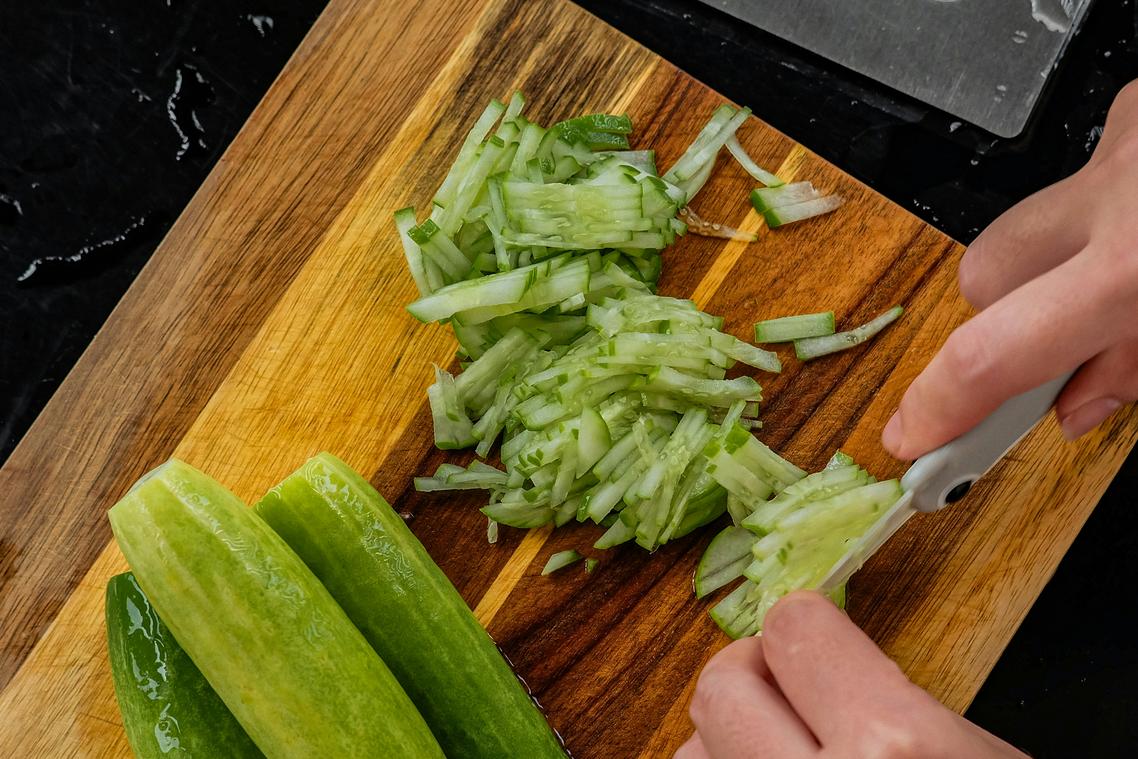
“Curl your fingers before you curl your confidence,” my first chef barked as I reached for an onion. He wasn’t being dramatic. He was teaching me The Claw Grip—the most important safety technique you will ever learn.
Here’s how it works.
First, place your fingertips on the food. Next, curl them under so the tips tuck safely beneath your knuckles. Your middle knuckles should form a flat vertical wall. That wall becomes the guide for the blade. (Yes, it feels awkward at first. So did riding a bike.)
“The knife rests on your knuckles, never your nails,” he’d repeat. And he meant never. The blade should glide against that knuckle wall while your fingertips hold the food steady behind it. This creates consistent slice thickness and protects what matters—your fingers.
Some cooks argue it’s faster to keep fingers flat and out of the way. “I’ve been chopping like this for years,” one line cook told me. Fair. But speed without structure invites accidents. The claw builds precision first; speed follows.
Now pair it with the pinch grip—the thumb and index finger pinching the blade for control. One hand steers, one hand guards. Together, they form a stable cutting system rooted in essential knife skills.
Control plus guidance. That’s the tango.
From Rough Chop to Fine Dice: The Core Cutting Techniques
The first time I tried dicing an onion, it rolled off the board, and I nearly followed it (nothing humbles you faster than a runaway vegetable). That’s when I learned the golden rule: create a stable base.
Create a Stable Base
Start by cutting round ingredients—like potatoes, onions, or apples—in half lengthwise. Place the flat side down on the cutting board. This simple move prevents slipping and reduces accidents. A stable base means better control, and better control means cleaner cuts. It’s one of those essential knife skills that separates frustration from flow.
The Rocking Chop
Next, the rocking chop. This technique works beautifully for herbs and garlic. Keep the knife tip on the board while lifting and lowering the heel in a smooth rocking motion. Think of it like a gentle seesaw. Because the blade stays in contact with the board, you get an even mince without smashing delicate leaves (basil bruises easily, and it will show).
The Push Cut
For firmer vegetables like carrots or celery, use the push cut. Slide the knife forward and down in one smooth motion. The forward movement reduces crushing and creates clean slices. Many beginners simply press straight down, but that often cracks harder vegetables instead of slicing them.
The Pull Cut (Draw Slice)
Conversely, soft foods with tough skins—like tomatoes—benefit from the pull cut. Start with the tip, then draw the blade back toward you in one fluid motion. This prevents squashing the interior while piercing the skin neatly.
Practical Application: Dicing an Onion
Finally, combine everything. Halve the onion for stability. Make horizontal and vertical push cuts, then slice downward to create even dice. Once you master this, meal prep becomes faster—especially when following budget friendly meal prep strategies that work.
With practice, each motion feels intentional rather than intimidating.
A Sharp Knife is a Safe Knife: Honing vs. Sharpening
Here’s my hot take: a dull knife is far more dangerous than a sharp one. When a blade loses its bite, you compensate by pressing harder. More pressure means less control, and that’s when slips happen (usually right when you’re slicing onions for taco night, naturally). The real danger is dullness.
Honing is maintenance. A honing steel doesn’t remove metal; it realigns the microscopic edge of the blade, keeping it straight and true. Think of it like combing messy hair back into place. I hone my knives every few uses because it keeps my essential knife skills crisp and predictable.
Sharpening, on the other hand, grinds away a tiny layer of steel to form a brand-new edge. It’s necessary—but only once or twice a year for most home cooks.
Some argue honing is optional. I disagree. Honing maintains sharpness; sharpening creates it when maintenance no longer works.
Now that your intent is satisfied, it’s time to turn knowledge into confidence. You understand the proper grip, the safe guide hand, and the essential cuts—what many chefs call essential knife skills. Still, I believe hesitation lingers until you feel the blade move. Muscle memory—your body’s ability to repeat a motion without conscious thought—builds that trust. So, grab a carrot or onion and practice the claw grip and smooth push cut. At first, it may feel awkward (like learning chopsticks), but control replaces fear. Some argue caution means avoiding sharp knives; I disagree. Respect, not avoidance, creates efficiency and consistency.
You came here looking to sharpen your kitchen confidence and bring more creativity to your cooking. Now you understand how flavor layering, global inspiration, and essential knife skills work together to transform everyday meals into unforgettable experiences.
The biggest frustration in any kitchen is feeling stuck—making the same dishes, struggling with uneven cuts, or lacking the confidence to experiment. Mastering essential knife skills eliminates that hesitation. It speeds up prep, improves presentation, and unlocks the freedom to try bold fusion ideas without fear.
Mastering essential knife skills not only elevates your cooking game but also complements the exciting innovations outlined in our article on the Top Food Trends Shaping Modern Kitchens in 2026.
Bring Precision and Flavor Back to Your Kitchen
If you’re ready to stop second-guessing your technique and start cooking with precision and flair, take action now. Explore more hands-on guides, practice your essential knife skills daily, and apply one new global flavor concept this week.
Join thousands of home cooks who rely on our #1 rated culinary insights to level up their kitchen game. Don’t let dull skills hold back bold flavors—start refining your technique today and turn every meal into a masterpiece.